
Principle structure of pipe repair clamp product
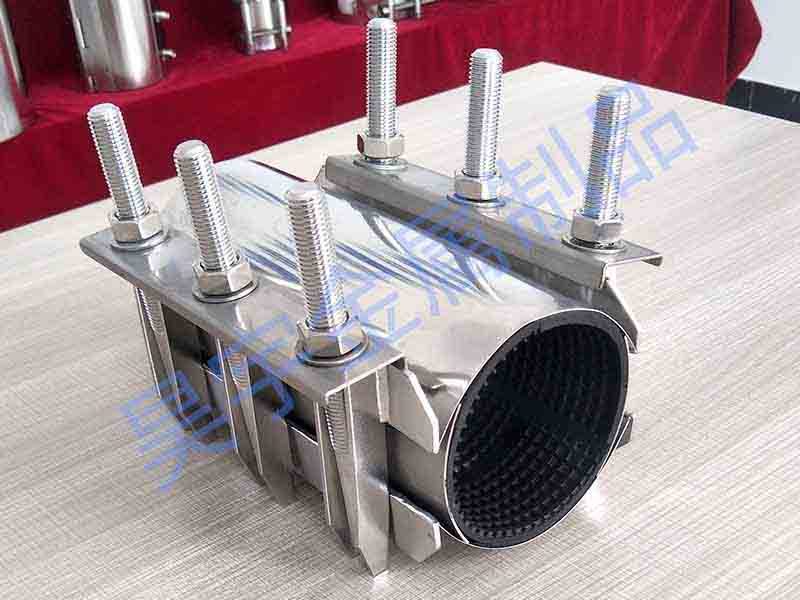
The pipe repair clamp manufacturer tells you that when the moving liquid, gas, dust and other media in the pipe are strengthened, the pressure of the sealing lip attached to the surface of the pipe body will also be strengthened. The pipe repair clamp manufacturer tells you that the structure of the device not only prevents the leakage of the medium in the pipe, but more importantly, it guarantees the overall sealing performance of the pipe.
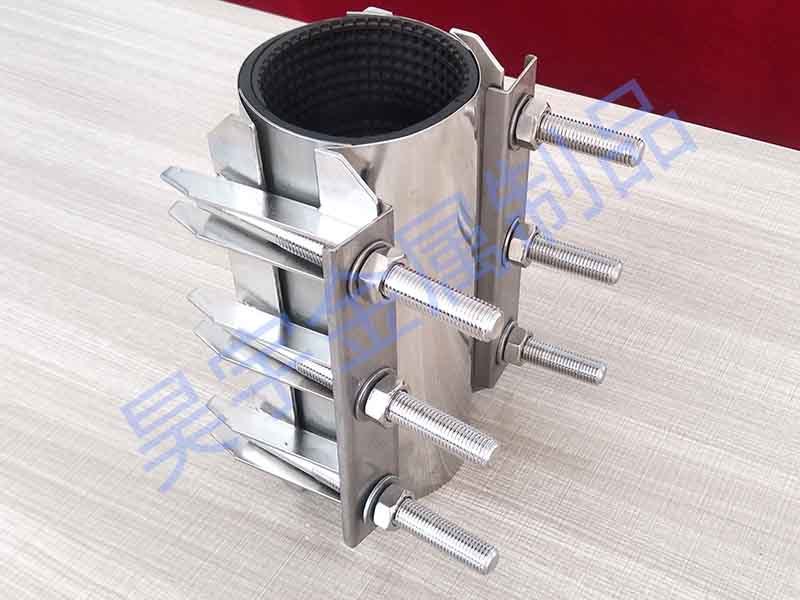
The pipe repair clamp manufacturer tells you that when under pressure, according to the Basque principle of fluid mechanics, in the case of sealing, every point in contact with the medium has a normal pressure equal to the internal pressure, so the bottom of the sealing ring’s lip is affected. Axial compression, the lip is axially compressed, the contact surface of the sealing lip and the pipeline becomes wider, and the contact pressure increases at the same time, so as to realize the self-sealing effect.
The pipe repair clamp manufacturer tells you that under pressure, the sealing surface and the pipe are tightly attached, which can effectively ensure the seal. Knowing from the actual working conditions, the sealing ring is mainly static sealing when working, and the relatively harsh working conditions are mainly small vibration and shock oscillation. From the characteristics of the Y-type sealing, it can be known that the sealing ring can withstand a dynamic seal of more than 20MPa.
The pipe repair clamp manufacturer tells you that the shell is the main pressure-bearing part of the pipe repair clamp, which directly affects the safety and reliability of the actual use. In-depth structural mechanics analysis must be carried out to determine the strength of each force point under the rated working pressure. Whether to meet the use requirements, find out the stress concentration points, and make corresponding modifications and improvements to ensure safety and reliability.
The pipe repair clamp manufacturer tells you that the strength of the shell is related to the tensile strength, ductility and thickness of the material used. The clamping force of the bolts used will cause the shell to deform to a certain extent. In addition, the lip of the shell Deformation will also occur under pressure. These factors are all factors that affect the pressure resistance, safety and reliability of the shell.

Our company is in Weihai, Shandong, a coastal and livable city with an exquisite environment.Founded in 2008, it is a professional company integrating R&D,production and sales for all types of pipe connection and repair products
CONTACT US
Add:No.16 Factory Building, China Energy Conservation Industrial Park, Fenghuangshan Road, Yangting Town, Huanjui District, Weihai, China
FOLLOW US

LEAVE A MESSAGE
If you are interested in us, you can contact us and we will be happy to serve you!